Historic printmaker workshops across Beyoglu open hand presses for city arts triennial
Independent print studios and archive presses along the backstreets of Istanbul are sharing restored stone lithography and letterpress techniques. The collaborative program highlights graphic arts traditions rooted in local paper culture.
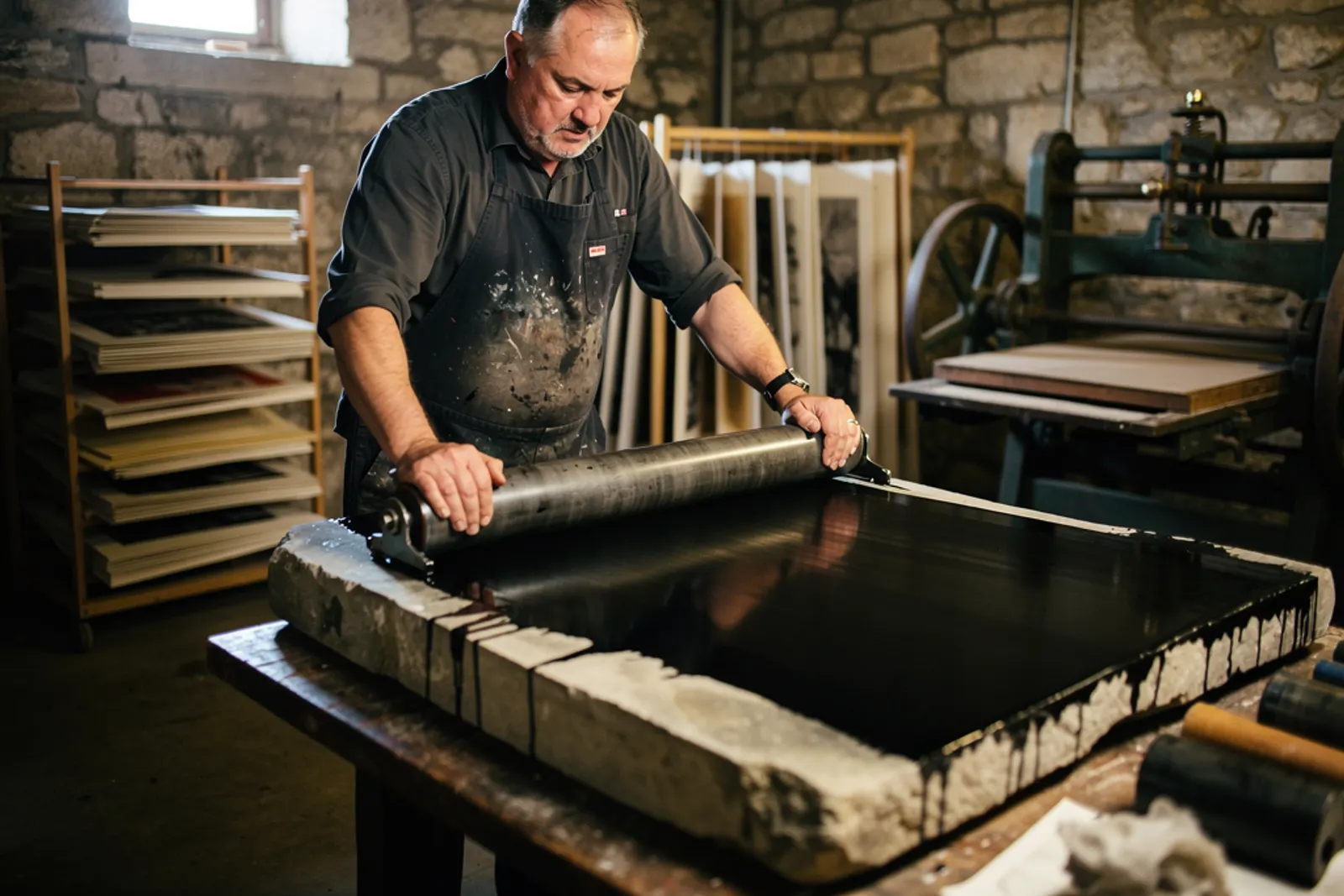
Illustration. A printer rolls black ink across a prepared lithographic limestone slab in a Beyoglu studio.
Where
Beyoglu, IstanbulMarmara region
Along the sloped cobblestone alleys connecting Galatasaray and Cukurcuma, small printmaking ateliers opened their iron-framed doors this week for a citywide graphic arts event. Visitors gathered around cast-iron cylinder presses and thick Bavarian limestone slabs to watch printmakers roll linseed inks across hand-carved blocks. The three-week program brings working studios into direct dialogue with local paper makers and archival bookbinders.
Organized through a network of independent craft guilds and neighborhood arts associations, the triennial focuses on physical printing processes that predate commercial photolithography. Master printers are pulling archival editions of regional typographic broadsides and linocuts cut by young visual artists. In basements scented with gum arabic, solvent, and damp rag paper, audiences can follow the meticulous mechanics of relief and intaglio printing.
Ink chemistry and Bavarian limestone blocks
Inside one courtyard studio near Tomtom, printer Selim Vardal spent the morning grinding the surface of a sixty-kilogram lithographic stone using carborundum grit and a heavy cast-iron levigator. The process levels the stone to an absolute plane, allowing greasy litho crayons to adhere to the porous calcium carbonate surface. Vardal then applied an etching wash of dilute nitric acid and gum arabic to chemically separate drawing areas from water-receptive blank stone.
Once prepared, the stone accepts black carbon ink only where grease marks were made, transferring a rich, velvety impression to dampened cotton rag paper beneath a hand-cranked scraper bar. The physical effort required to run each sheet highlights the mechanical rigor behind early nineteenth-century Anatolian printed broadsheets. Apprentices and art students stood shoulder-to-shoulder along the workbench, watching ink transfer under even pressure.
“You feel the exact drag of the roller on the limestone; mechanical printing is an act of tactile resistance.”
Selim Vardal, master printmaker
Preserving vintage foundry types and presses
Across the neighborhood, other participating studios are demonstrating relief woodcuts cut from dried walnut and pear planks. Printmakers carve along the grain using shallow V-gouges, creating rhythmic textures that mimic traditional Ottoman marbled paper motifs and street architectures. The workshops are also displaying vintage lead type cases containing Arabic and Latin metal fonts cast in regional foundries during the mid-twentieth century.
These historical typographic collections, rescued from decommissioned print houses along the Golden Horn, are being cataloged by volunteer archivists during the festival. Studio visitors are invited to pull experimental proofs from the type drawers, learning to handle composing sticks and brass tweezers:
hand-setting lead type into steel chases for letterpress test runs
inking relief woodblocks with natural mineral pigments and cold-pressed linseed oils
Archive broadsheets and neighborhood walking routes
A printed walking map, rolled and distributed on handmade mulberry paper, connects the fourteen participating studios through a self-guided route down the Beyoglu hillside. The open-door policy will continue through the end of the month, concluding with an open-air portfolio exchange in a shared courtyard behind the historic French Gateway. Studio members plan to bind a collaborative folio of thirty original prints pulled during the festival runs.
Organizers hope the public engagement will secure sustainable funding for apprentice positions in historic book arts and print conservation. By preserving mechanical presses that require neither software nor electricity, these independent studios sustain a resilient material link to regional publication history. For the coming weeks, the steady thud of impression platens will remain the neighborhood's prevailing rhythm.
Sources
- Independent Print Workshops Directory and Triennial Register — Beyoglu Arts Cooperative, Catalog Folio 3
Spotted an error? Write to [email protected] — see our corrections policy.