Riding the slow train through the Cilician limestone defiles
Watching yellowing poplars yield to vertical limestone gorges from an unhurried compartment window.
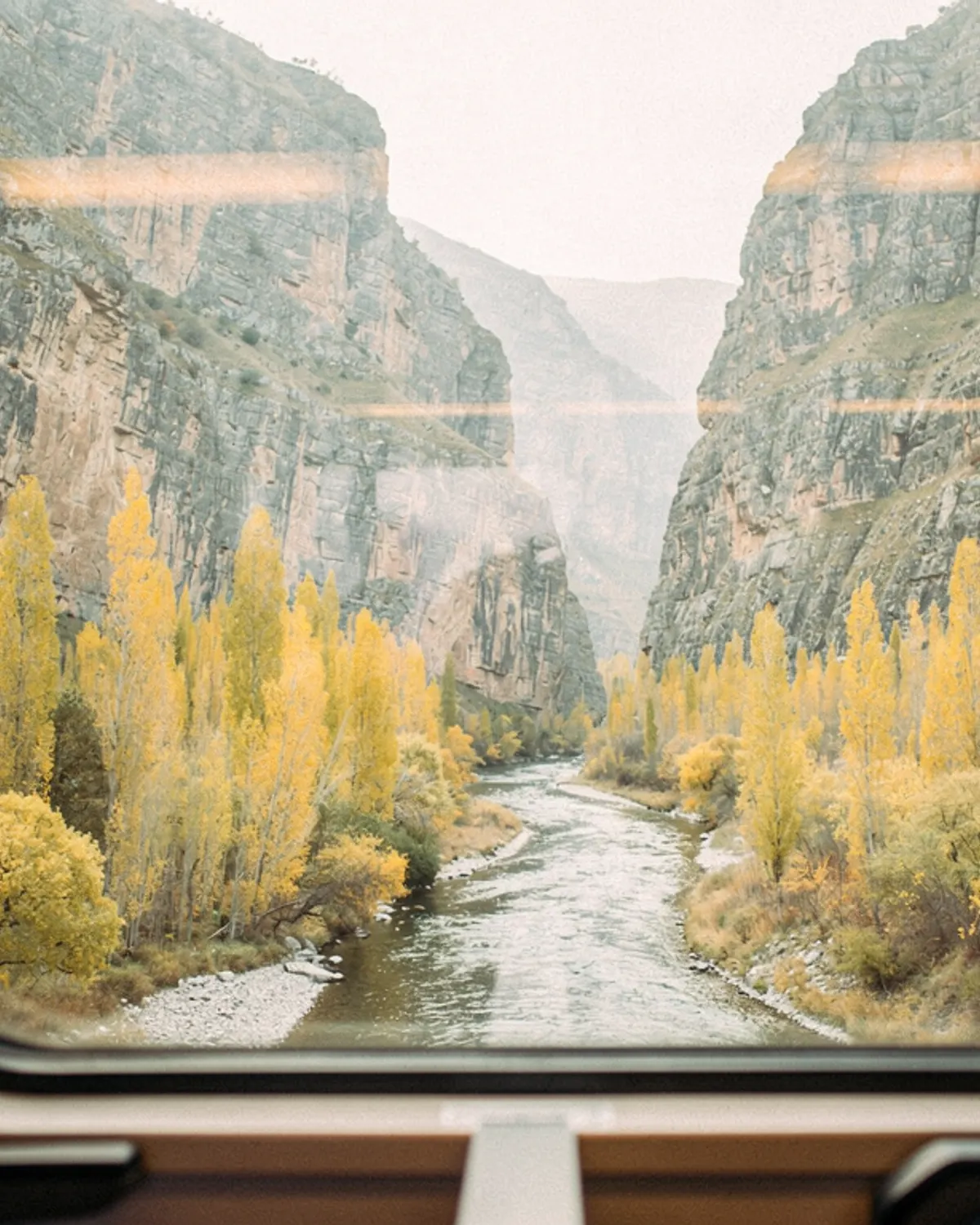
Illustration. Riding the slow train through the Cilician limestone defiles
The regional train departs the central Anatolian plateau in the early morning, pulling away from concrete grain silos and flat wheat stubble into the raw shadow of the Taurus mountains. While modern highways blast through tunnels, the rail trunk still honors the nineteenth-century surveyors who threaded steel through narrow defiles, clinging to the contours of the Çakıt river canyon with stubborn engineering perseverance.
This is not high-speed transit. The coaches are utilitarian, upholstered in hard blue fabric with roll-down windows that let in the crisp mountain air and the mineral smell of crushed limestone ballast. Passengers settle in for the long descent: university students carrying jars of pickled peppers from home, railway mechanics with toolboxes, and families visiting relatives in the citrus belt below.
Through the Cilician Gates
As the engine climbs past Ulukışla, the landscape closes in violently. The Cilician Gates, the historic mountain pass traversed by caravans and marching legions since antiquity, tower above the train as sheer walls of pitted gray dolomite. Poplar trees grow in dense golden ribbons along the river bed below, their yellow leaves swirling into the train's wake whenever the train slows for a switch.
Conductor Orhan Bey, walking the aisle with his ticket punch, taps the brass window latch to lower the pane an extra inch. 'The tunnels on this stretch were cut by hand through solid stone,' he says, gesturing toward the sheer rock face skimming past three feet from the glass. 'There are twenty-two tunnels in this single canyon. When you enter them, you can smell the dampness stored in the mountain heart since last winter.'
The rhythm of water stops
At small mountain junctions like Belemedik, the train pauses for several minutes on single-track sidings to allow northbound freight trains to grind past. The platform is nothing more than packed cinders beneath huge plane trees. Old stone depot buildings, constructed from local ashlar with steep slate roofs, stand surrounded by piles of seasoned pine firewood.
Passengers step onto the track bed to stretch their legs, buy small brown paper bags of roasted wild walnuts from village children, and refill water bottles from the brass fountain trickling beside the switch box. There is no public address system, only the sudden, echoing squeal of iron brake shoes as the freight train passes, its cars loaded with sugar beets and raw iron ore from eastern pits.
Emerging into southern air
Beyond the final stone viaduct, the mountains break apart with sudden theatricality. The canyon walls drop away, and the train rolls into the wide, fertile flats of the Çukurova plain. The sharp pine chill of the plateau vanishes within fifteen minutes, replaced by the humid warmth of the southern lowlands and the scent of damp loam and orange blossoms.
Coats come off, folded over luggage racks, and passengers lean toward the open windows to catch the warm southern breeze. Reaching the coast by train is an unhurried education in geography. It teaches you the physical barrier of the mountains that kept Anatolia's high plateau isolated from the Mediterranean shore, an experience entirely erased by an hour-long flight across the clouds.