Microscopic residue analysis on Tigris valley stone bowls detects wild grass starches and pine resin
Archaeometric testing on polished limestone containers from a pre-pottery Neolithic site reveals traces of crushed wild seeds and tree resin sealant. The laboratory results illustrate complex food storage and plant processing before farming was fully established.

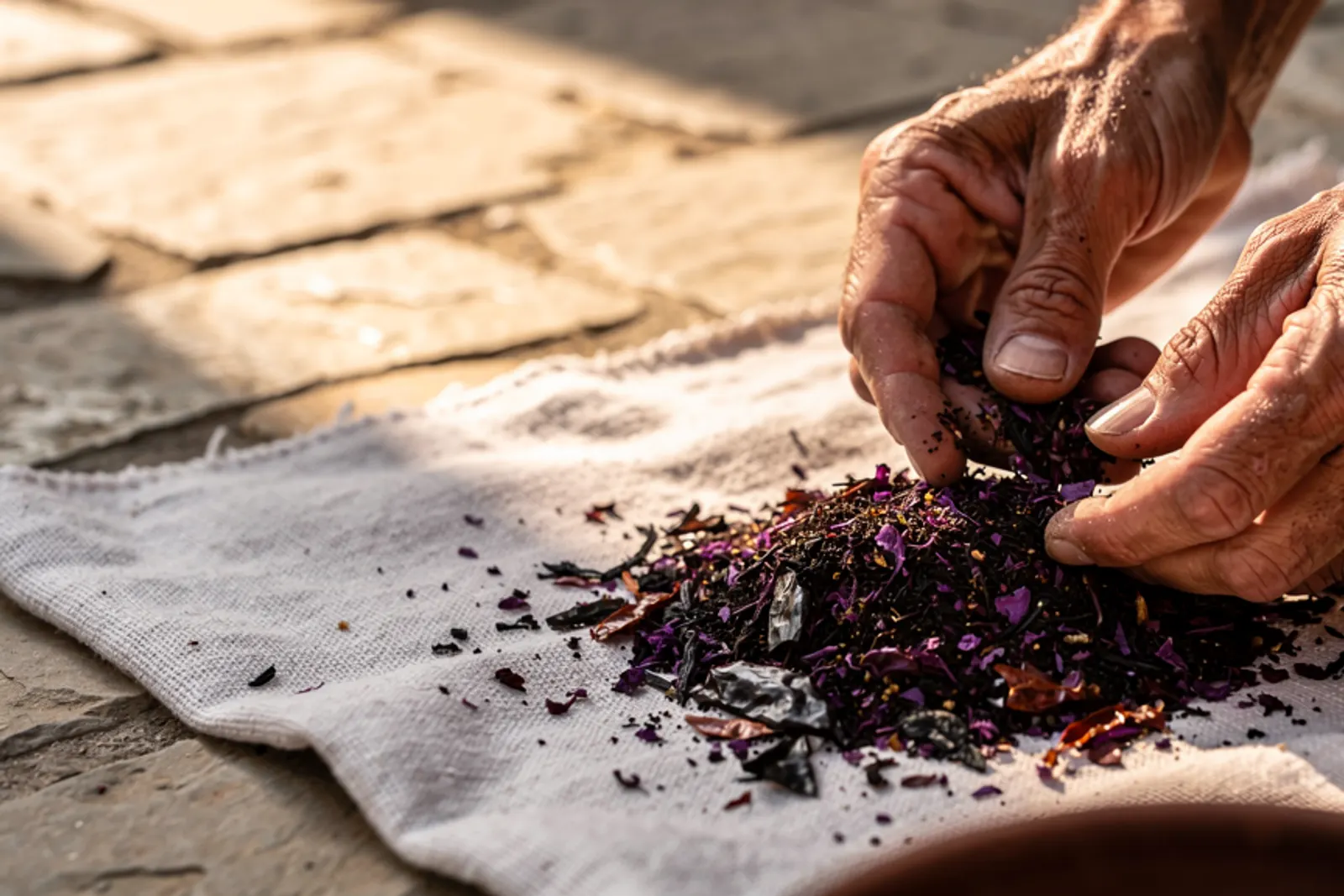
Illustration. An archaeobotanist uses a micropipette to collect sediment extract from a carved limestone shard under low lighting.
Where
Bismil, DiyarbakirSoutheastern Anatolia region
A specialized archaeometry laboratory has completed an intensive chemical and microscopic analysis of carved stone vessels excavated along the upper Tigris river valley. Researchers applying gas chromatography-mass spectrometry and polarized light microscopy identified organic residues trapped within the microscopic pores of eleven-thousand-year-old limestone fragments. The findings confirm that early sedentary communities processed wild cereal grains and applied tree resins to waterproof porous containers.
The examined shards were recovered from stratified sediment layers within an aceramic Neolithic settlement near Bismil. Long before pottery technology appeared in the region, inhabitants carved wide basins, bowls, and pestles from local sedimentary rocks. Until recently, the exact culinary or utilitarian function of these labor-intensive stone vessels had remained largely speculative, based primarily on external wear patterns rather than molecular proof.
Extracting micro-botanical starches from stone pores
To isolate trapped residues without contaminating ancient materials, lab technicians used ultra-clean ultrasonic baths and non-destructive solvent washes. Microscopic examination of the extracted solutions under cross-polarized light revealed distinctive Maltese-cross optical interference figures characteristic of undamaged starch granules. Comparative botanical analysis showed these starches belonged to wild rye, wild barley, and Aegilops, an ancestor of domestic wheat.
Several starch granules exhibited heat damage and mechanical crushing, suggesting that grain was pounded into coarse flour and mixed with water inside the stone basins before consumption. Archaeobotanist Leyla Gungor noted that the presence of thermal gelatinization points to early hot-stone cooking methods, where heated river cobbles were dropped directly into liquid mixtures to produce porridge-like meals.
We are seeing the physical traces of recipes prepared thousands of years before the arrival of domesticated field crops.
“We are seeing the physical traces of recipes prepared thousands of years before the arrival of domesticated field crops.”
Leyla Gungor, laboratory archaeobotanist
Identifying conifer resins used as mineral sealants
In addition to cereal starches, mass spectrometry scans revealed diterpenoid biomarker profiles indicative of pine tree resin applied to the inner walls of several bowls. Porous limestone readily absorbs moisture, which can cause vessels to degrade or leak when holding liquids over extended periods. Coating the inner hollows with heated conifer pitch rendered the stone impermeable and provided natural antibacterial protection.
The resin signatures match native Pinus brutia varieties that grew along the moist foothill valleys flanking the Tigris basin during the early Holocene. The laboratory protocol successfully differentiated ancient organic components through systematic chemical classification:
polar solvent extraction isolating starch granules and micro-charcoal residues
lipid mass spectrometry detecting oxidized abietic acid derivatives from aged pine pitch
Expanding archaeometric studies along the upper Tigris
The analytical protocol established during this project will now be applied to grinding stones and limestone mortars collected from adjacent excavation sites across the Diyarbakir plain. Comparing residue profiles across multiple settlements will help researchers track how plant utilization evolved during the transition toward settled village life. The microscopic data offers an intimate view into the sensory landscape of early community kitchens.
The tested artifacts have been returned to climate-controlled storage cases within the regional museum archive, along with full digital spectra of their organic residues. As chemical analysis tools become more sensitive, these stone surfaces continue to yield unexpected details about prehistoric technology and diet. The team will present their comparative database at a regional archaeometry colloquium early next spring.
Sources
- Upper Tigris Valley Neolithic Residue Analysis Report — Archaeometry Research Consortium, Lab Monograph ARC-92
Spotted an error? Write to [email protected] — see our corrections policy.