Tuz Golu brine shrimp blooms draw thousands of juvenile flamingos to southern flats
Field biologists tracking seasonal saline shifts report exceptional concentrations of Artemia salina across southern mudflats. The abundant crustacean hatch sustains late-brood flamingo chicks preparing for autumn dispersal.
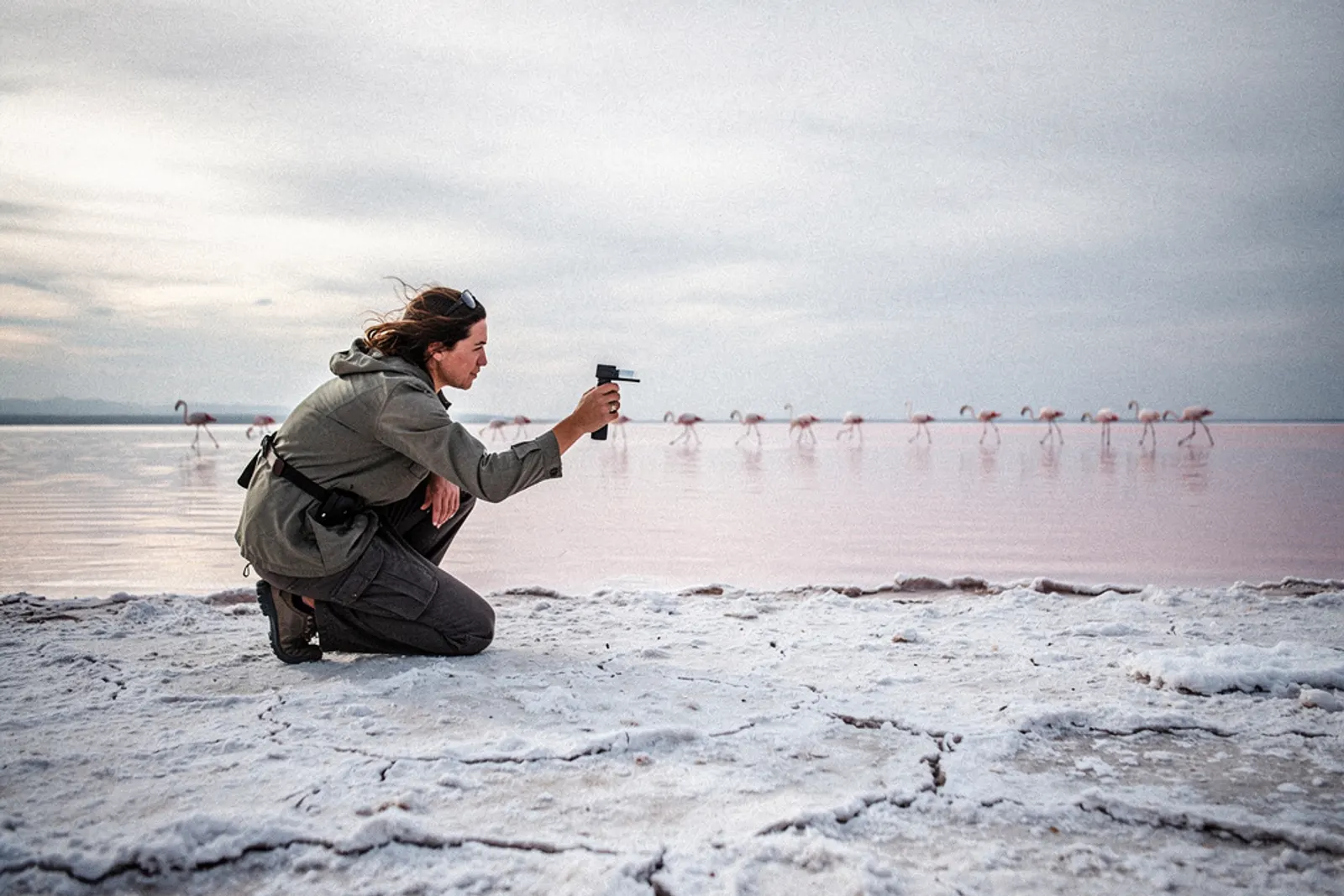
Illustration. A field biologist measures water salinity near resting flamingos on the southern shore of Tuz Golu.
Where
Eskil, AksarayCentral Anatolia region
Dense clusters of brine shrimp have spread through the shallow southern embayments of Tuz Golu this week, prompting thousands of fledgling greater flamingos to gather across the wet mineral crusts near Eskil. Survey teams moving along the salt margins on foot recorded wide crimson clouds of Artemia salina drifting in the knee-deep brine. The sudden surge in crustacean density offers a timely calorie reservoir for young birds fledging ahead of seasonal dry winds.
Water monitoring stations installed across the southern basin show that late summer evaporation rates created the exact salinity window needed for dormant crustacean cysts to hatch en masse. As water levels receded to thin films over the clay floor, benthic microalgae multiplied rapidly, providing ample food for the emerging shrimp. Field teams from nearby ecological field stations established linear transects to measure how bird distributions correlate with the saline patches.
Measuring salinity along the chalky shoreline
Surveyors set out from the mud edges before dawn, carrying optical refractometers and sampling jars to document the crustacean biomass across three separate zones. The southern flats near Eskil maintain a stable layer of moist silt even as the northern salt pans crystallize into blinding white sheets under late-season heat. In these warm, hypersaline pools, the shrimp reproduce rapidly, creating dense floating carpets that turn the shallow water a gentle rust color.
The young flamingos filter this concentrated brine with their specialized bills, feeding continuously throughout the daylight hours. Their gray down has begun turning a faint shell pink from the beta-carotene contained within the crustaceans, marking a vital transition into juvenile plumage. Biologists working the shoreline noted that flock cohesiveness has increased noticeably as feeding grounds concentrate around the deeper feeder channels.
“The chicks are gaining the fat layers they need within days of discovering these southern brine pockets.”
Hasan Celik, field monitoring coordinator
Monitoring crustacean biomass across seasonal pools
Hydrological teams note that regional irrigation patterns upstream have stabilized seasonal inflows into the southern wetland margins. Rather than drying out completely before September, several low-gradient runnels continue to seep through the alluvial gravels, buffering the high evaporation rates. This steady baseflow maintains the shallow lagoons where both algae and microcrustaceans thrive without suffering lethal desiccation.
To track how changing water margins affect feeding behavior, researchers divided the south shoreline into distinct survey blocks. Field teams register bird counts twice daily, noting feeding duration, flock movement, and sediment depth across the following parameters:
salinity gradients recorded across forty distinct shallow pooling zones
weekly volumetric sweeps evaluating live crustacean biomass per cubic meter
Preparing for regional autumn migrations
Within the next month, falling temperatures will slow the reproductive rate of the brine shrimp, prompting the lake to crystallize into its winter mineral shield. The juvenile flamingos, strengthened by weeks of concentrated feeding, will begin gathering in larger staging flocks along the deeper western canals before lifting toward Mediterranean wintering grounds. Their departure follows the natural rhythm of Anatolian steppe lakes, where life expands and contracts with water chemistry.
Field researchers plan to leave autonomous water loggers active through the coming winter to track groundwater recharge underneath the dry salt cap. These continuous salinity and depth measurements will provide baseline figures for upcoming spring nesting surveys across the broader central steppe basin. For now, the expanse remains filled with the murmuring calls of thousands of foraging juveniles.
Sources
- Central Anatolian Inland Wetland Monitoring Register — Provincial Directorate of Environment and Urbanization, Survey Sheet TG-24/09
Spotted an error? Write to [email protected] — see our corrections policy.