Steep slope hazelnut growers in Giresun turn to hand winches and terrace repair
On slopes where machinery cannot stand, Black Sea orchardists use cable drums and stone dry-walls to gather late nuts and stabilize rain-soaked soil. The traditional methods prevent hillside erosion during autumn storms.
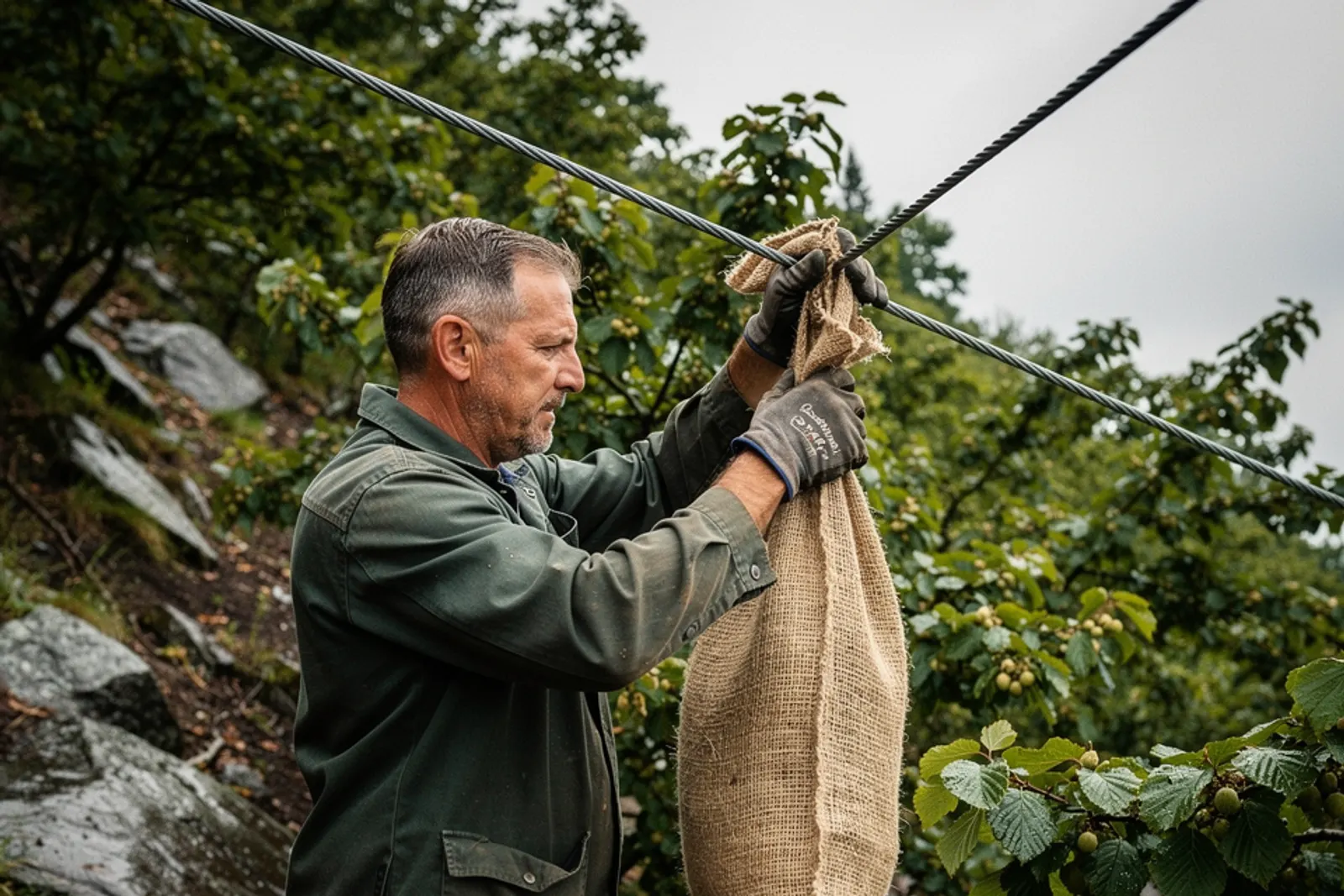
Illustration. A farmer secures a heavy burlap sack to a steel wire cable running down a steep hillside hazelnut orchard.
Where
Dereli, GiresunBlack Sea region
Growers in the steep mountain folds of Giresun completed their secondary hazelnut clearing this week, using hand-cranked cable winches to haul burlap sacks from near-vertical orchards. In the Aksu river basin, hazelnut trees cling to hillsides so precipitous that harvesters must secure ropes around tree trunks while picking. With the primary crop safely drying on village roofs, farmers turn their attention to rebuilding stone terraces that keep orchard soils from sliding away during heavy coastal storms.
The work demands intense physical endurance and deep knowledge of hillside hydrology. Families balance on narrow soil ledges, gathering fallen nuts from thick moss mats before damp fungal rot sets in. Tractors and motorized carts cannot navigate these gradients, leaving steel wire lines and gravity-fed slides as the primary tools for transporting harvests down to roadheads.
The mechanics of the wire line
Locally known as varagel, the simple cable system consists of a tensioned steel wire strung between a sturdy highland walnut tree and an anchor post down by the road. Harvesters hook heavy canvas sacks onto sliding steel pulleys and regulate the descent with a control cord. The system moves hundreds of kilograms of nuts down cliff faces in minutes without damaging tree bark or churning the soft topsoil.
At the base of the wire, neighbors take turns unhooking bags and loading them into small open pickups. The practice requires close cooperation among families whose plots share boundary stones along the ravine. While the nuts ride the wire, pickers walk down carrying only their lunch tins and wooden pruning poles.
“On these hillsides, gravity is your hardest enemy when walking up, but your best helper when sending the crop down.”
Ihsan Yanik, orchardist and cooperative member
Rebuilding dry-stone skirts
Once the harvest completes, growers immediately begin terrace repairs known locally as seki. Farmers gather flat schist boulders washed out by previous rains and stack them without cement around the roots of hazelnut bushes. These dry-stone walls trap falling leaves and rotting organic matter, creating rich compost while letting groundwater seep through without bursting the terrace face.
Orchard floors are deliberately left with native moss and clover cover rather than scraped bare. The vegetation acts like a natural sponge that absorbs torrential Black Sea downpours and anchors the thin topsoil against landslides.
- Tensioned high-tensile steel wire drums anchored to mature hardwood trunks
- Hand-stacked dry schist walls forming stepped micro-terraces
- Inter-row clover cover to trap moisture and prevent topsoil washouts
Preparing for the dormant season
With terrace maintenance concluding, growers prune dead branches and apply wood ash around tree crowns to deter winter pests. The hazelnut husks, known as zuruf, are saved in dry sheds to serve as bedding for village dairy cows or fuel for hearth stoves. The entire rhythm of village life adapts to the seasonal slope conditions.
In the coming weeks, quiet will settle over the orchards as winter cloud banks drop into the river valleys. Farmers will gather in village teahouses to crack roasted nuts and discuss wood supplies, confident that their stone walls will hold the hills intact until spring buds appear.
Sources
- Sloped Orchard Soil Conservation Guidelines — Black Sea Agricultural Cooperative Union, Hillside Management Bulletin 12
Spotted an error? Write to [email protected] — see our corrections policy.