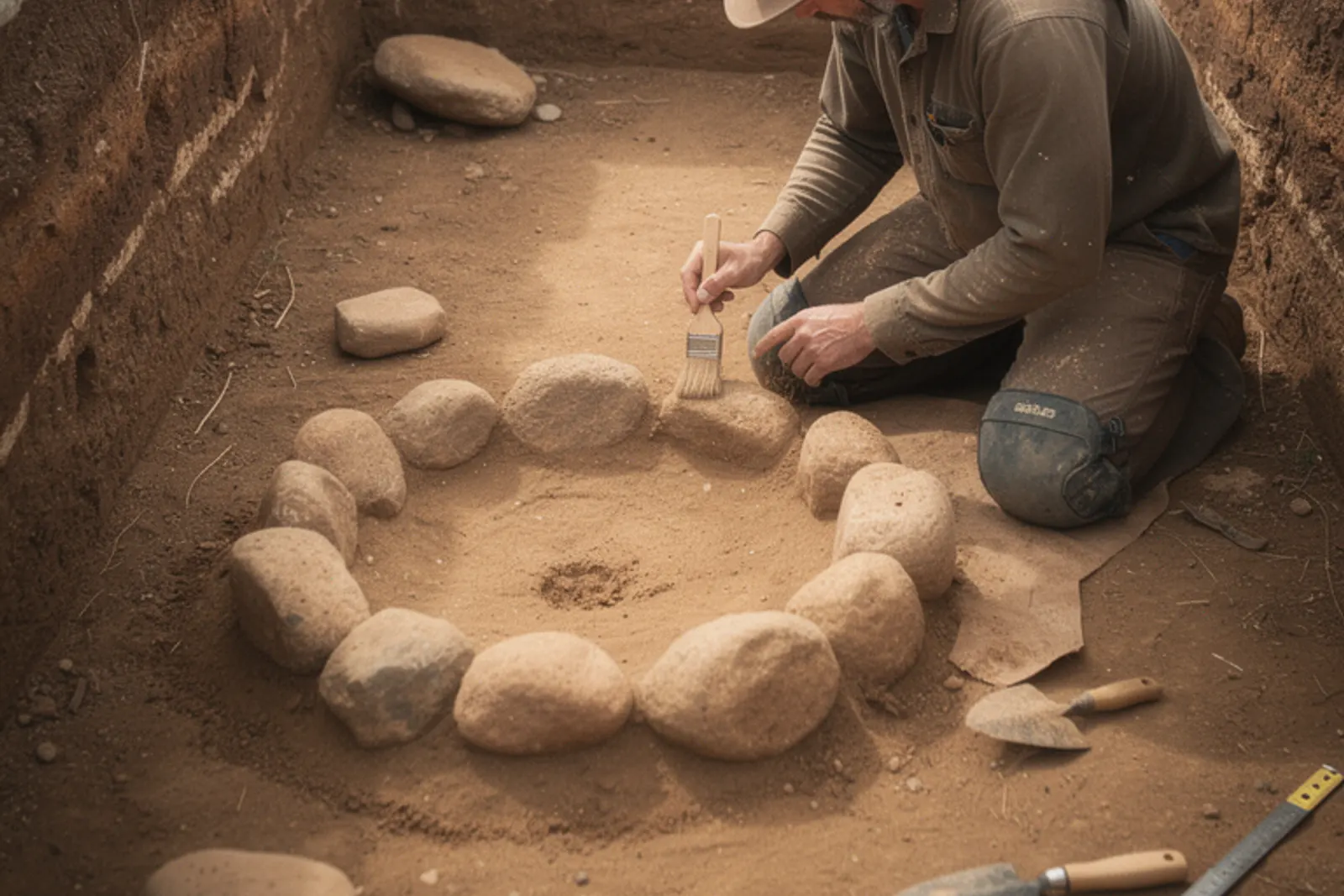
Illustration. Archaeological trench workers clear packed silt from a prehistoric stone hearth on the Bakla Tepe terrace.
Heritage & DigsExcavations at Bakla Tepe reveal communal hearths and early metal casting molds
Field teams near Izmir have concluded their autumn trench work after uncovering multi-room stone foundations and clay crucibles. The layout points to shared metalworking facilities across several neighboring households.
Field teams working on the western slope of Bakla Tepe completed their seasonal trench clearance this week, exposing an interconnected row of dry-stone foundations. The dig directorate confirmed the discovery of an open-air courtyard paved with rounded river pebbles and packed clay. Beside the central hearth, excavators lifted two intact terracotta crucibles speckled with copper slag. Charcoal samples collected beneath the stone benches will travel to an Aegean university laboratory for compositional analysis.
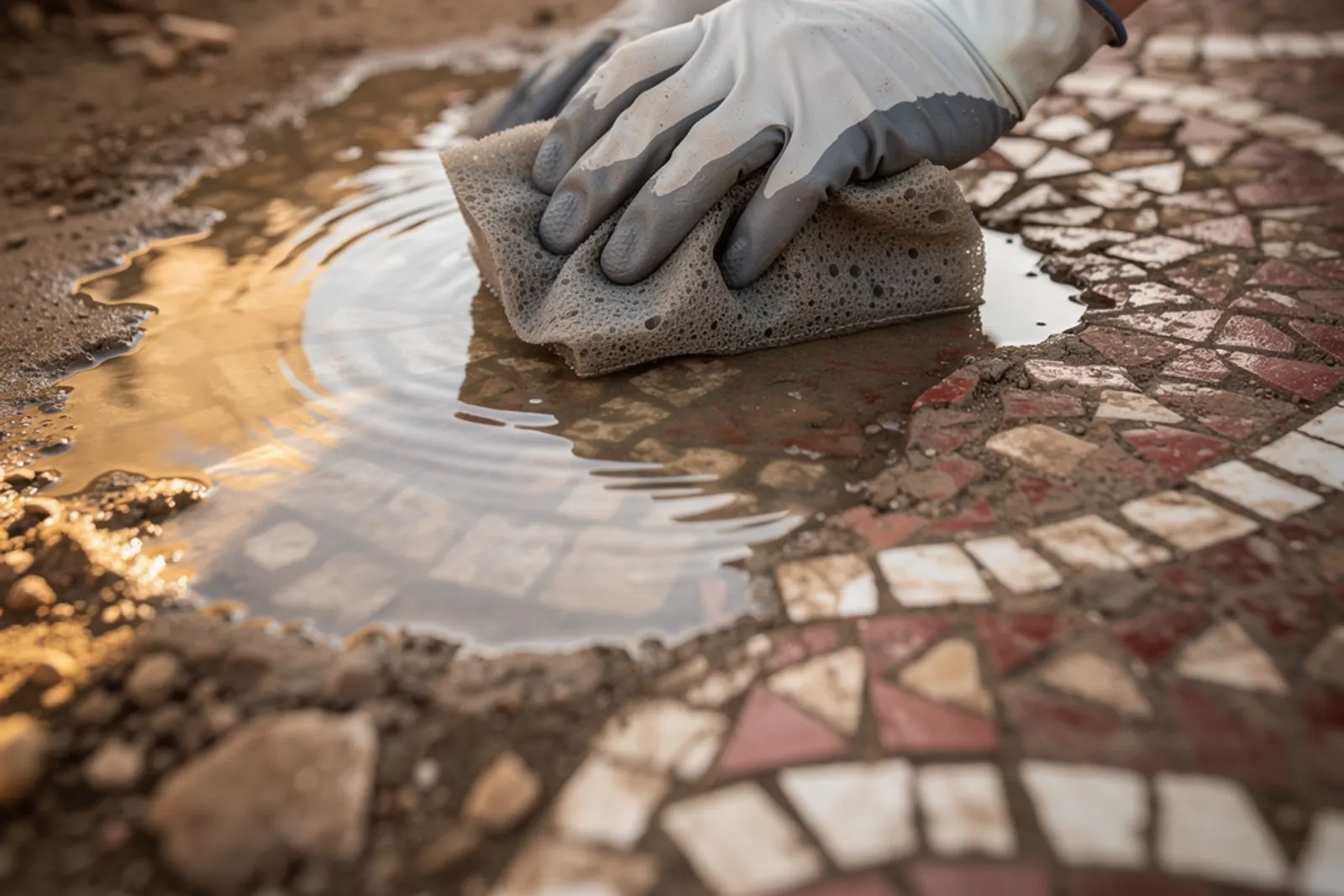
The trenches sit on an alluvial terrace overlooking the Tahtali river valley, an area long settled for its easy access to arable bottomland and coastal routes. Rather than individual household hearths, the recovered plan suggests neighbors shared smelting fires and heavy stone grinding slabs. Archaeologists worked with fine trowels and brushes to clear thick alluvial silt that had sealed the floor layer undisturbed. The preservation allows researchers to document household organization before winter rains pause site operations.